Gobbler
An open-source EE lab tool that converts user-authorized content into agent-ready context: videos, documents, web pages, audio, and authenticated browser sessions.
Project
Enablement Engineering
Engagement
open source
Duration
Ongoing (active development)
The Problem
Teams can access a lot of information—YouTube videos, PDFs, web pages behind logins, audio recordings, research notebooks. Their AI agents usually cannot. They are limited to what fits in a context window or what someone manually copies into a chat.
That gap between available knowledge and agent-usable context is a bottleneck. Every video transcript, research paper, or web page becomes manual middleware unless the content can be converted into a consistent, provenance-preserving format.
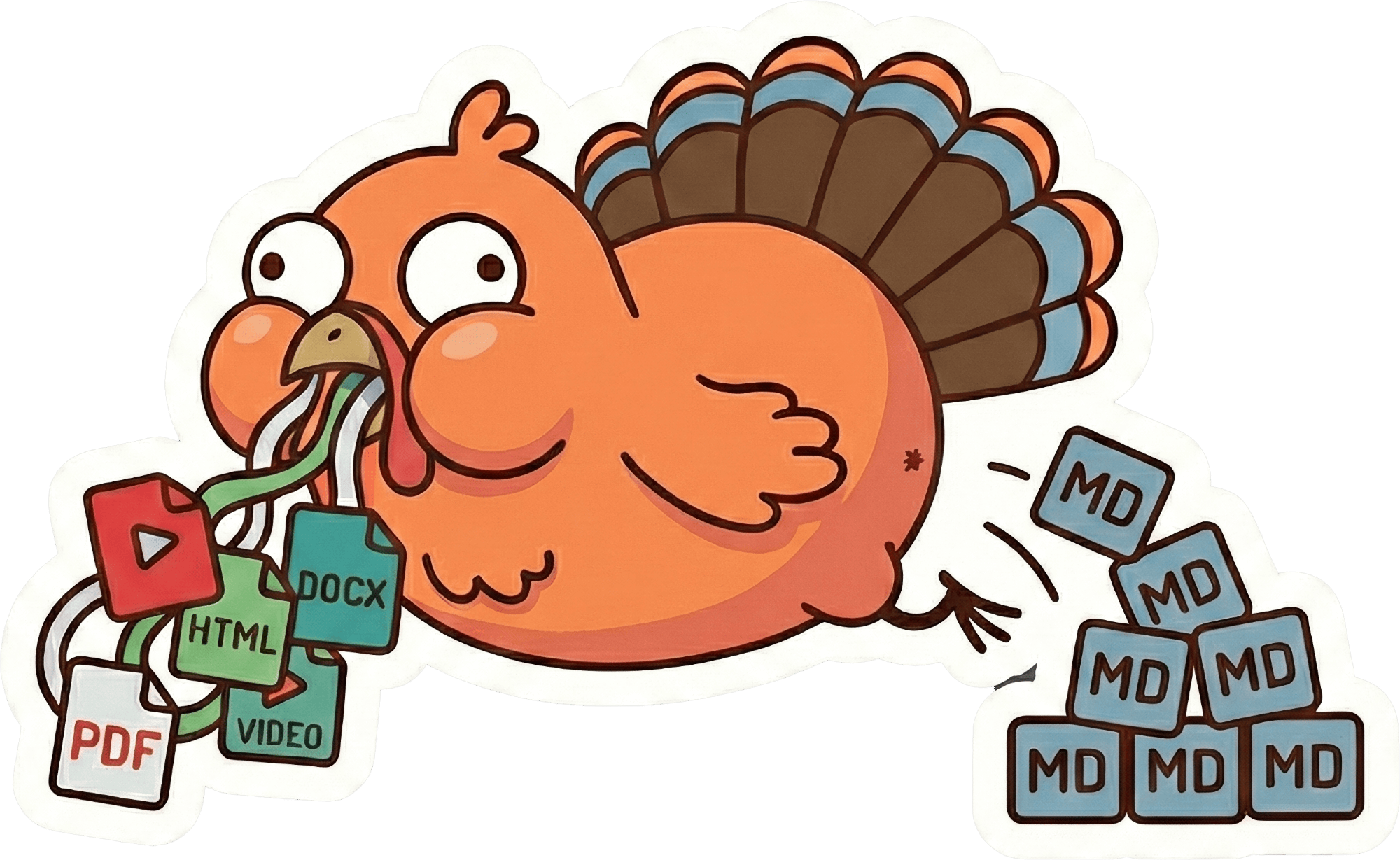
Gobbler closes that gap. It makes user-authorized content available to agents as clean, structured markdown.
The Approach
Gobbler gives AI agents access to the content a user explicitly authorizes. When the user can watch a YouTube video, the agent can get its transcript. When the user can read a PDF, the agent can work from a markdown conversion. When the user is logged into a web app, Gobbler can extract content from that authenticated session through an explicit browser bridge.
gobbler youtube "https://youtube.com/watch?v=..." -o transcript.md
gobbler document report.pdf -o report.md
gobbler audio meeting.mp3 -o meeting.md
gobbler webpage "https://docs.example.com" -o docs.md
gobbler browser extract  # From my authenticated browser session
Everything converts to markdown with YAML frontmatter—the format AI agents work best with:
---
source: https://youtube.com/watch?v=VIDEO_ID
type: youtube_transcript
title: "Video Title"
duration: 847
word_count: 2341
---

# Video Title

Content here, ready for AI reasoning...
One output format. Consistent metadata. Preserved provenance.
How Agents Access Gobbler
Gobbler exposes capabilities through three patterns, depending on how the agent prefers to work:
MCP Protocol — For Claude Code and Claude Desktop. The agent calls Gobbler tools directly:
claude mcp add gobbler-mcp -- uv --directory /path/to/gobbler run gobbler-mcpSkills — Markdown instruction files that teach Claude how to use the CLI. Progressive disclosure keeps context windows efficient—Claude only loads full instructions when triggered:
skills/
├── gobbler-youtube/     # YouTube transcription
├── gobbler-audio/       # Audio/video transcription
├── gobbler-document/    # Document conversion
├── gobbler-webpage/     # Web scraping
├── gobbler-browser/     # Browser automation + AI chat integrations
└── gobbler-setup/       # Installation and troubleshooting
CLI — Direct command-line usage. Agents with shell access can call Gobbler directly:
gobbler youtube URL              # YouTube transcripts
gobbler audio FILE               # Audio/video transcription
gobbler document FILE            # PDF, DOCX, PPTX, XLSX
gobbler webpage URL              # Web pages (JS-rendered)
The Browser Bridge
The hardest content to access is behind authentication: research notebooks, internal documentation, and web apps a user is already authorized to use. Gobbler’s browser extension bridges this gap.
The extension creates a WebSocket connection between the user’s browser and Gobbler. Agents can extract content from explicitly shared pages, query authorized notebooks, and interact with approved AI interfaces:
gobbler browser extract          # Extract current page
gobbler notebooklm query "..."   # Query my NotebookLM research
gobbler chatgpt query "..."      # Send to ChatGPT
gobbler claude query "..."       # Send to Claude.ai
Security model: Only tabs the user explicitly adds to a “Gobbler” tab group are accessible. No accidental access to banking, email, or anything that has not been opted in. The agent can only reach what the user explicitly shared.
Pluggable Backends
Different situations call for different tradeoffs. Gobbler’s provider system lets the workflow swap backends without changing how agents use it:
| Category | Provider | Tradeoff |
|---|---|---|
| Transcription | whisper-local | Free, private, runs locally |
| Transcription | openai-whisper | Faster, costs money |
| Document | docling | Local Docker service |
| Webpage | crawl4ai | JavaScript rendering via Docker |
# Privacy-first: local transcription
gobbler audio meeting.mp3

# Speed-first: API transcription
gobbler audio meeting.mp3 --provider openai-whisper
Why This Matters
The value of AI agents scales with what they can access. An agent that can only see what someone pastes into a chat window is limited. An agent that can work from authorized videos, PDFs, documents, and browser sessions can help with real workflows.
Gobbler is infrastructure for agent capability: a small example of the harnesses, skills, and tools that make agent workflows more useful outside a demo.
Open Source
MIT licensed. Built on Crawl4AI, Docling, faster-whisper, and youtube-transcript-api.
Need a reviewable AI workflow?
Bring the workflow, content, review process, and failure modes. We will help decide whether discovery is the right next step.