AI Adoption Discovery
For teams with a promising AI workflow, real materials, and unclear adoption risks.
Prototype the workflow, define eval questions, and decide what is worth building
Reviewable AI workflows for accessibility, education, and high-trust content teams.
We build Evals Agent tools Skills Adoption loops
Start with real materials; leave with representative tests, review gates, and handoff routines.
We build the evals, agent tools, demos, training assets, and feedback loops that move LLM workflows from prototype to durable practice in accessibility, education, and governed content operations.
For teams with a promising AI workflow, real materials, and unclear adoption risks.
Prototype the workflow, define eval questions, and decide what is worth building
For teams ready to turn a proven workflow into agents, tools, review gates, and operational infrastructure.
Build the deployment surface, eval harness, and acceptance criteria
For teams that need training, use-case libraries, demos, and feedback loops after the first workflow ships.
Teach the team, watch drift, and keep practice improving after launch
Best fit
The strongest projects start with a workflow people already care about: course materials, accessibility review, content transformation, research workflows, or operational processes where mistakes have consequences.
The work uses actual documents, examples, edge cases, constraints, and stakeholder expectations instead of idealized demo inputs.
Outputs need acceptance criteria, review gates, correction paths, and evidence people can challenge before they trust the system.
The team should leave with procedures, training surfaces, and feedback loops they can operate without treating the AI as a black box.
University of Illinois Chicago — Digital Accessibility Services
A production AI pipeline that turns inaccessible PDFs into semantic, accessibility-first markdown. Built for UIC Digital Accessibility Services and released under AGPL-3.0.

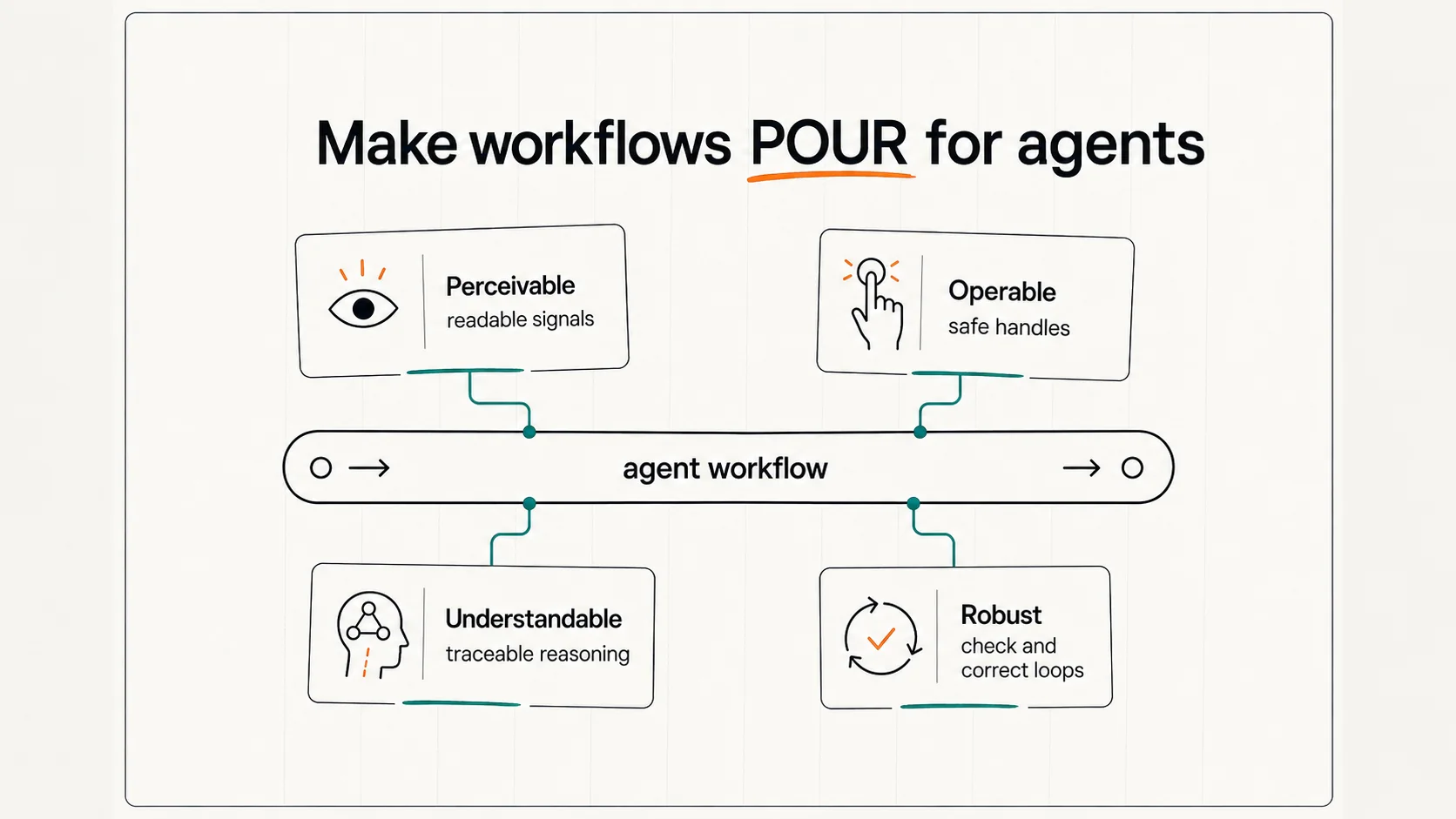
AI agents are now participating in accessibility work. The question is whether we've made our practice available to them. POUR — perceivable, operable, understandable, robust — wasn't just for users.